
Description
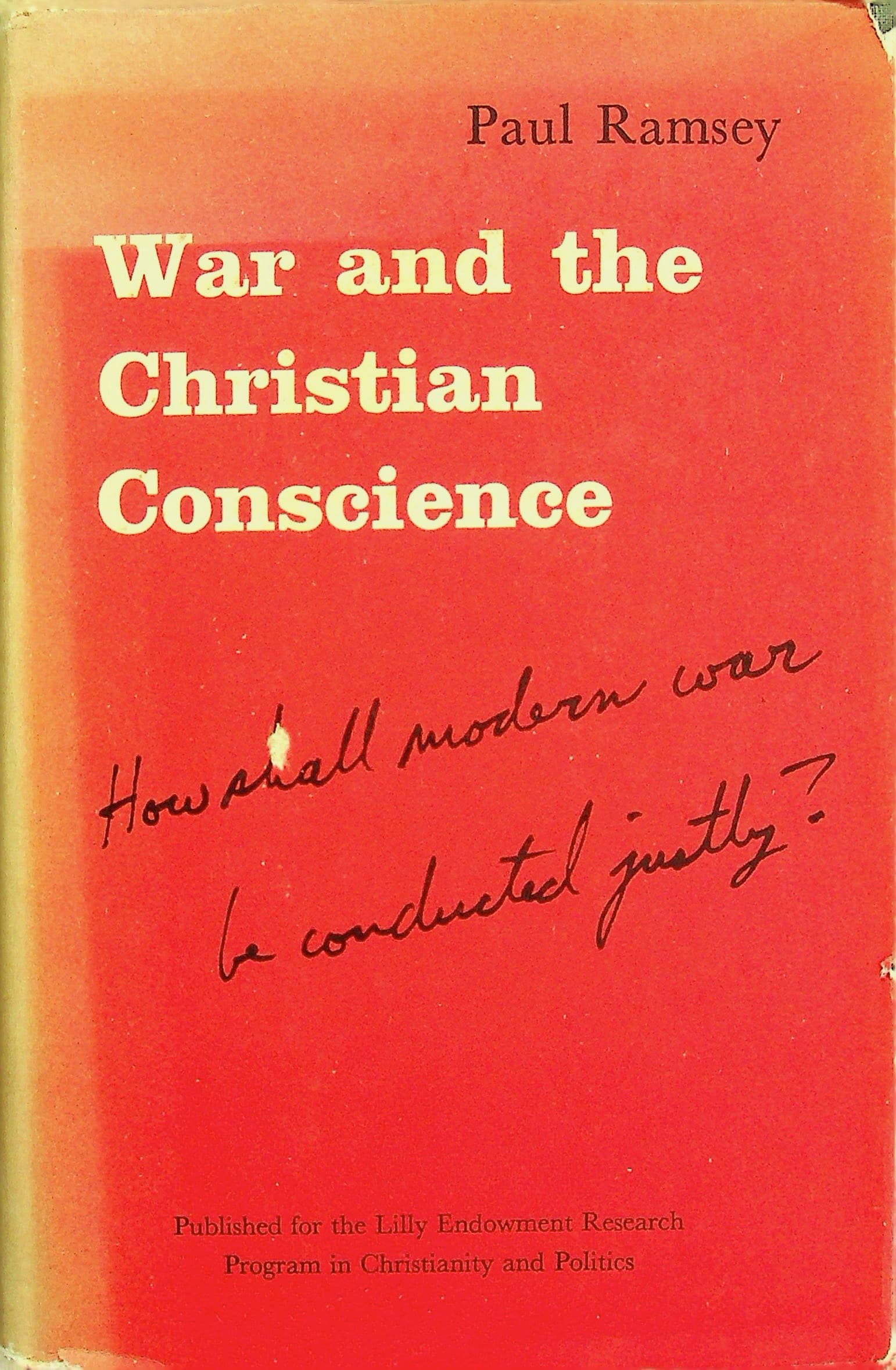
Duke University Press, 1961. Hardcover, xxiv, 331 pp. First Edition, 1961. Good in acceptable+ dust jacket. Grey cloth covered boards with green block and gold lettering on spine. Light bumping and scuffing to edges of covers. Binding tight. Previous owner's name and university stamped on front free end paper. A few pages have faint bracket marks in pencil. Otherwise pages are lightly aged but unmarked. Dust jacket has several 1/2" or less chips and tears and creasing to edges. Fading to paper over spine and light to moderate overall scuffing, aging and soiling to jacket as well. NOT price clipped Now in an archival-quality (removable) Brodart Cover. NOT Ex-Library. NO remainder marks. [From back of jacket and front jacket flap] This book presents the case for counter-forces warfare in U. S. military policy. The author bases his argument upon a careful review of writings on the problem of war by Christian thinkers of the past who worked out the "just war" theory, and upon a consideration of the contemporary literature on the subject. He reviews a variety of opinions today, including those of nuclear pacifists and non-pacifists, Protestant and Roman Catholic spokesmen, and some of the leading weapons analysts of the present day, such as Morgenstern and Kahn. The conclusion reached is that the "just conduct" of war in the western religious tradition means counter-forces warfare, and excludes a policy based on counter-people retaliation. This requires both more rational or politically purposive armament and rational nuclear disarmament, and prompt unilateral steps in this direction by governments. From St. Augustine, who first "justified" Christian participation in war, to pronouncements of the churches today the rule of civilized warfare has meant the immunity of civilian populations from direct attack. If the criteria for the just conduct of war had never existed, they would still have to be invented, as Christian faith and love shape themselves for responsible action in this or any age. If international relations and military policy are ever again to serve the legitimate purposes of nations, governments must find guidance and regulation in the moral doctrine of just conduct in war. This is perhaps the only recent book that seriously examines traditional Christian teachings on war with a view to discovering their meaning and relevance for today. It makes a major contribution in effecting fruitful contact between Roman Catholic moral theology and Protestant statements of Christian ethics. It is also the first full-length critique of the World Council of Churches' study document on "Christians and the Prevention of War in an Atomic Age - A Theological Discussion," and of earlier reports of the Calhoun Commission and the Dun Commission of the National Council of Churches of Christ in America. The author, Paul Ramsey, is Harrington Spear Paine Professor of Religion and Chairman of the Department at Princeton University. He is the author of Basic Christian Ethics and Christian Ethics and the Sit-in, and editor of Jonathan Edwards' Freedom of the Will and Faith and Ethics: The Theology of H. Richard Niebuhr. He is also on the editorial boards of The Works of Jonathan Edwards and of Theology Today.