Description
William Heinemann, London [Published Date: 1919]. New impression, reprint December 1919.

Rare, out-of-print & unusual books · Since 1997
Turn the pages with the arrows, keyboard, or a swipe.
William Heinemann, London [Published Date: 1919]. New impression, reprint December 1919.
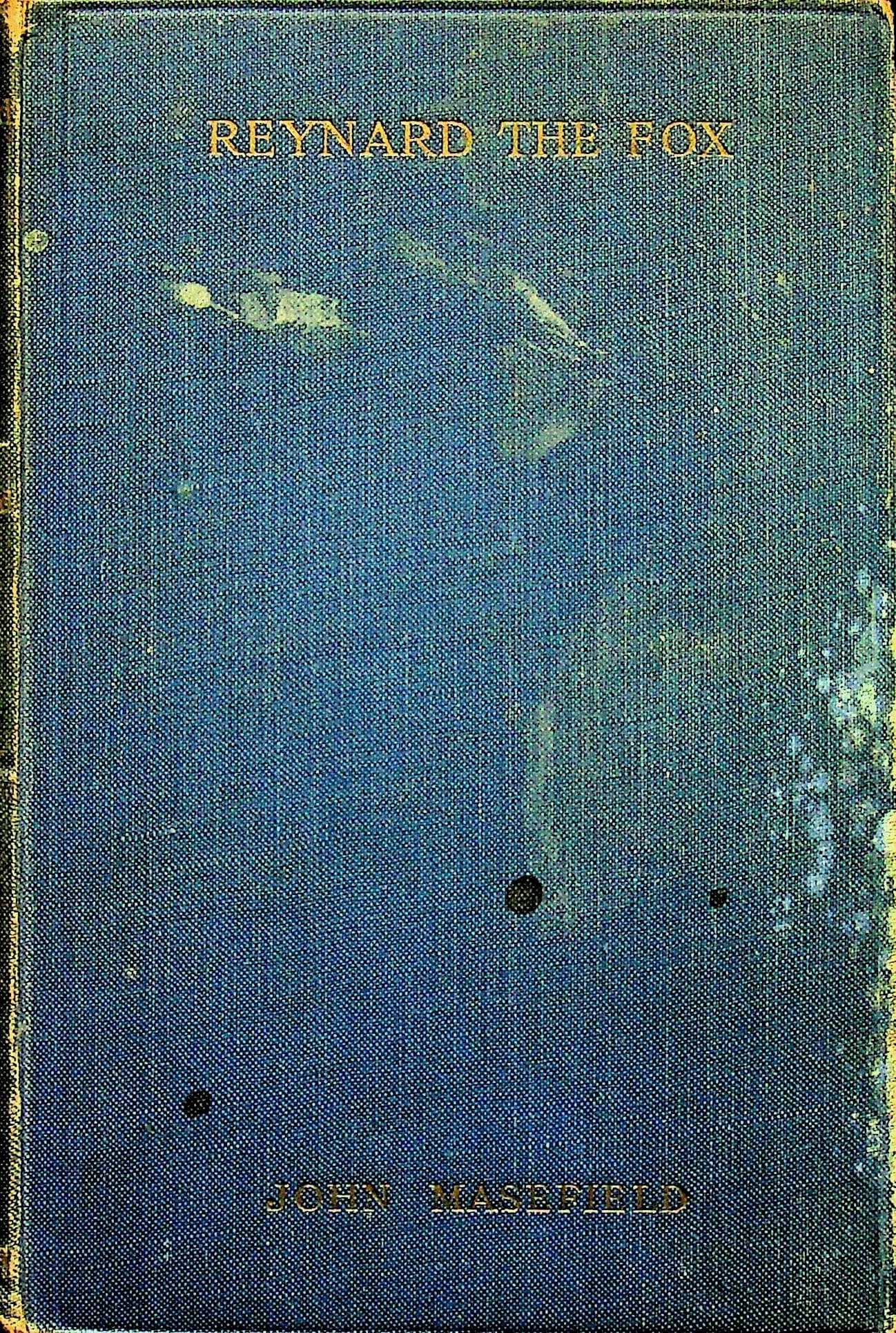
In acceptable condition/ NO dust jacket. Blue cloth covered boards with gold lettering on front and spine. Moderate to heavy scuffing spotting and soiling to covers with the color scuffed off along edges and tearing to the cloth along the rear hinge of the spine. Binding tight. Previous owner's name in ink dated London 1920 on front free end paper and another name in pencil on front free end paper as well. Otherwise pages are aged but unmarked with occasional spotting and soiling. NOT Ex-Library. NO illustrations in this edition. A solid reading copy. [From review in Vol 124 of The Atlantic Monthly, 1919] The publishers refer to Reynard the Fox as 'a triumph of New Poetry.' The triumph is secure, but the honor belongs to the genius of John Masefield, and to a superb tradition of English poetry which comes down from Geoffrey Chaucer. The Ghost Heat Run is English to the core, in its theme, in its meter, in its diction; and its methods hark back, in their virility and directness to the Canterbury Tales. The 'newness' is the fresh leafing of an ancient oak. And its roots have proved again their invincible vitality. The poem falls into two parts. The first is the gathering for and English fox-hunt; the second, the chase of the fox. No less than 70 persons, instead of Chaucer's immortal nine-and-twenty, ride up to the rendezvous. And in spit of that appalling number our interest never flags. For a fox-hunt is a catholic as a pilgrimage, and the men and women who appear in swift succession, on horseback and in habit as they live, are of all sorts and conditions and are done with incomparable zest. Part One is neither a catalogue, nor a gallery of portraits, nor an anthology of epitaphs; it is a vivid cross-section of the English country-side in action . . . The fox is the central figure of the second part. And the sweep and vigor of the narrative are worthy of the great tradition. The whole lovely English landscape flies before us and beneath us, but we are not spectators - we are participants . . .