
Description
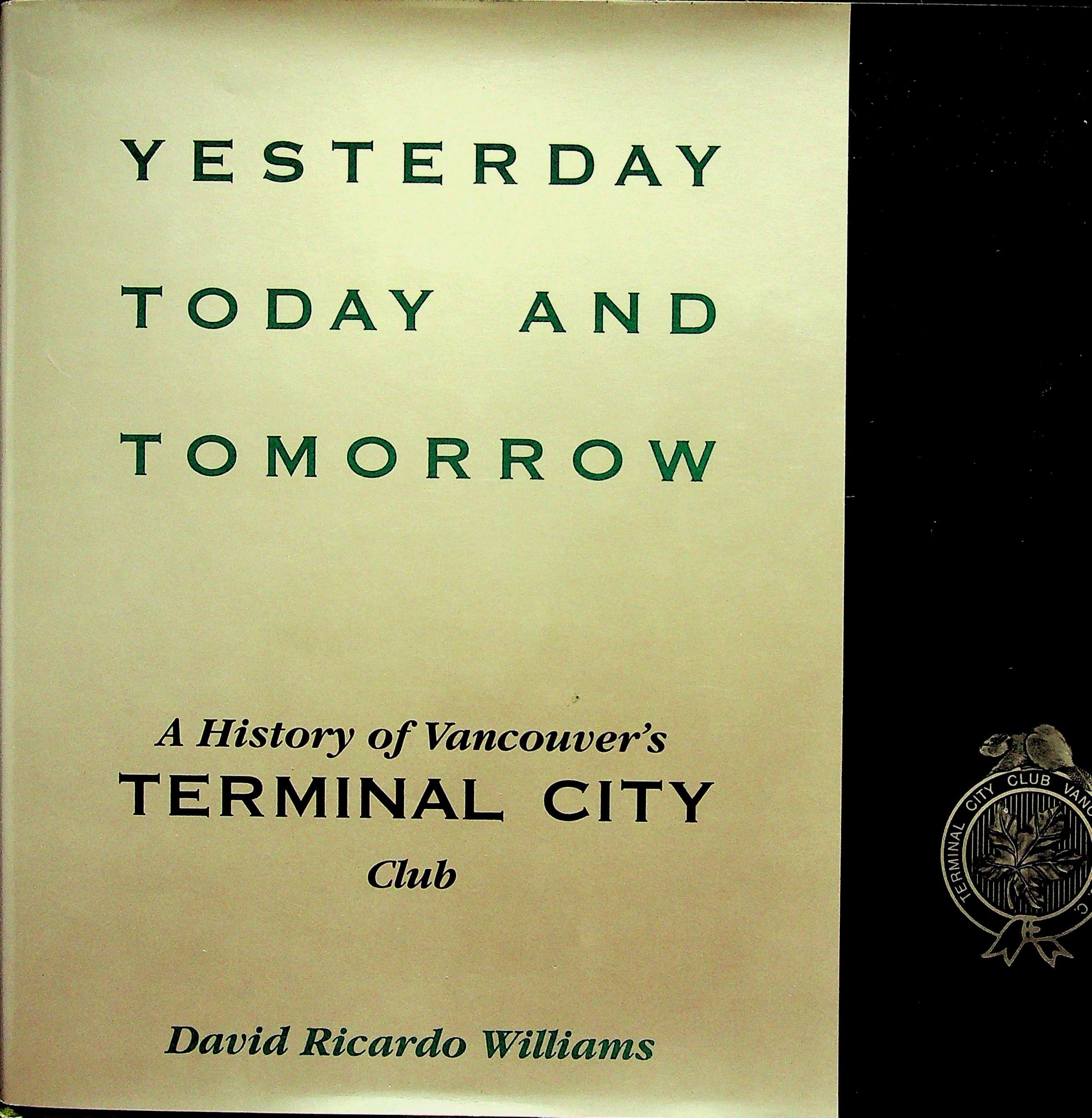
The Club, Vancouver [Published Date: 1992]. Hardcover, 196 pp. No other printings listed. Very good in very good dust jacket. Green Paper over Boards with gold lettering and emblem on front and gold lettering on spine. Light bumping and scuffing to edges of covers. Binding tight. Pages clean and unmarked. Dust jacket has light bumping and creasing to edges and light overall scuffing. Now in an archival-quality (removable) Brodart Cover. NOT Ex-Library. NO remainder marks. Black and white illustrations throughout, with some color. [From front jacket flap] 1892. in the fledgling city of Vancouver, Canada. the mayor and a group of optimistic merchants founded a businessmen’ s club that some years later evolved into the Terminal City Club. Vancouver had recently become the terminus of the Canadian Pacific Railway and welcomed the first transcontinental passenger train on 23 May 1887. The coming of the railway transformed Vancouver, with its fine natural harbour, into one of the worlds great seaports. Many of the club's early members were involved in the port, the railway and allied businesses, and for most of its life, the club has made its quarters in a building that overlooks the harbour and the first train station. Social organizations like the Terminal City Hub have often been an important segment of the larger community. This history, published by the Terminal City Club to celebrate its centennial, is a lively account of its first century, during which it has been an integral part of the commercial life of the "Terminal City" of Vancouver. In addition to chronicling various aspects of business, social and wartime life in the context of changing times, this copiously illustrated book contains many humorous anecdotes about the foibles of members. Also included is a full account of how the Terminal City Club, founded as a club exclusively for men, came to accept women into full membership. Now that the Terminal City Club has successfully met a number of challenges and the vicissitudes of two world wars over the last hundred years, what lies ahead for it? The book examines that question and makes some suggestions about the role the club will play in the years to come.